
Product Details
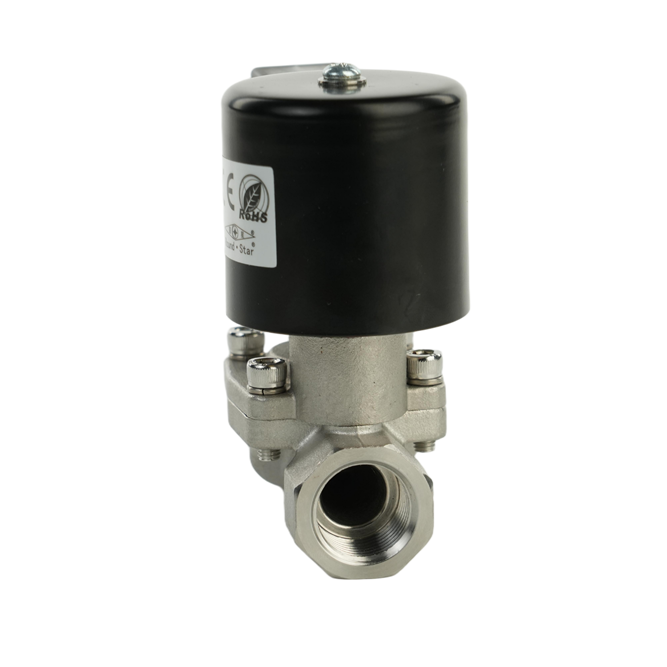
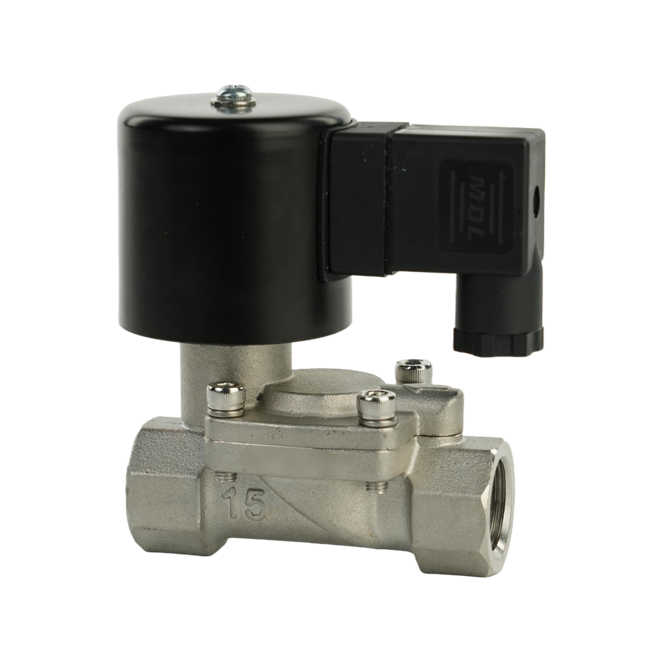
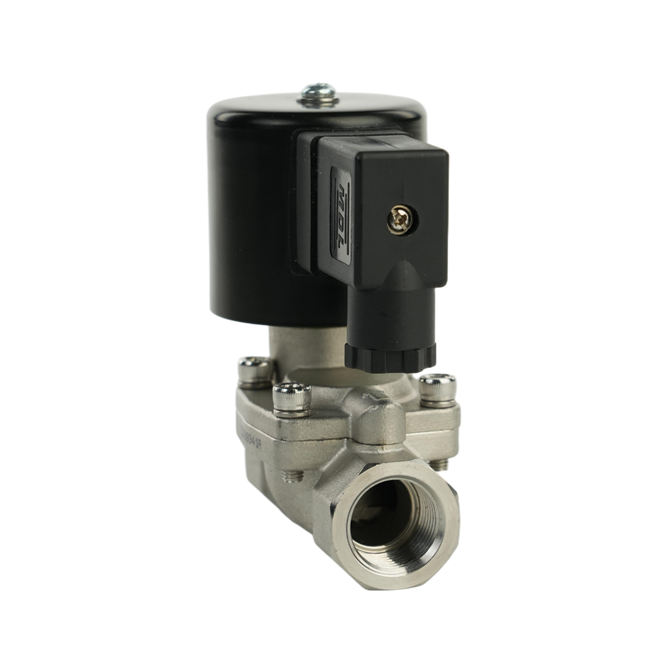
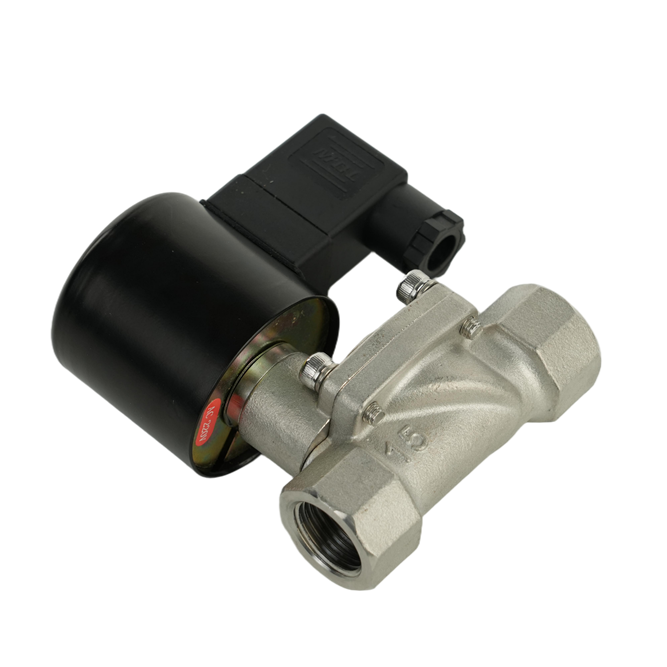
Pipeline Solenoid Valve
Product Introduction
Automatic on/off valve based on electromagnetic induction, with core parts (valve body, core, solenoid coil, return spring, seals).
Energized coil generates magnetic field to attract valve core (overcoming spring resistance) for opening; de-energized coil loses magnetic field, spring resets core to close. No extra actuator, direct electric signal control. Compact structure, fast response, low-cost & high-reliability on/off element for industrial automation and civil pipelines.
Quick Inquiry
Product Detail
I. Product Parameters
1. Material Parameters
• Valve Body: Brass (for conventional water/air media), Stainless Steel (304/316, for corrosion-resistant media), Cast Steel (WCB, for medium and high pressure applications)
• Valve Core: Stainless Steel, Fluoroplastics (PTFE, resistant to strong acids and alkalis)
• Seals: Nitrile Rubber (NBR, oil and water resistant), Fluoroplastics (FKM, resistant to high temperature corrosion), Silicone (for food-grade media)
• Coil Housing: Engineering Plastics, Metal Shielding (anti-electromagnetic interference)
2. Specification Parameters
• Nominal Diameter: DN1~DN200 (corresponding to 1/16"~8")
• Nominal Pressure: 0~16MPa (covering low-pressure, normal-pressure to medium- and high-pressure applications)
• Connection Method: Threaded connection (small diameter), Flange connection (large diameter), Welded connection (high-pressure applications)
3. Control and Operating Parameters
•Power Supply Voltage: AC220V, AC110V, DC24V, DC12V (standard specifications)
•Control Method: Normally closed (power-off valve closes), Normally open (power-off valve opens), Self-holding (low power consumption)
•Operating Temperature: -40℃~200℃ (depending on seal material)
•Media Type: Water, oil, gas, weak acid/weak alkali solution, steam (dedicated steam type)
•Protection Rating: IP65 (standard dustproof and waterproof), IP67 (waterproof immersion)
•Response Time: ≤0.5 seconds (small diameter), ≤3 seconds (large diameter)
II. Product Advantages
• Fast response speed and efficient start/stop: The valve core opening and closing action is completed instantly when the coil is energized/de-energized, with a response time as low as 0.5 seconds. This is suitable for automated production lines and fluid control loops that require rapid switching of fluid pathways.
• Simple structure and easy installation: No complex transmission components, small size and light weight; threaded/flange connections allow direct connection to pipelines without additional supports or control accessories, saving installation space and costs.
• Convenient control and strong compatibility: Can be directly controlled via on/off signals, eliminating the need for positioners, solenoid valves, or other accessories. Seamlessly integrates with PLCs, relays, sensors, and other automation equipment, adapting to various control systems.
• Wide range of media compatibility and high cost-effectiveness: Available in brass, stainless steel, and cast steel valve body materials, combined with different seals, suitable for various media such as water, oil, gas, steam, and weak acids/alkalis; procurement and operating costs are significantly lower than pneumatic and electric valves, making them suitable for large-scale batch applications.
• Safe and reliable with low maintenance costs: The normally closed design automatically shuts off the valve in the event of a power outage, effectively preventing media leakage; only the seals are vulnerable parts, making replacement quick and easy, requiring minimal daily maintenance and resulting in a low failure rate.
III.Product Applications
• Civil Building Sector: Water/gas circuit control for household water heaters, wall-hung boilers, and central air conditioning systems; automatic start/stop of building tap water and fire sprinkler systems.
• Industrial automation: On/off switching of fluid transport pipelines in production lines; oil circuit control of air compressors and hydraulic systems; acid and alkali solution pipeline control in electroplating and coating workshops.
• Water treatment: Control of chemical dosing pipelines in wastewater treatment plant dosing systems; automatic water circuit switching for pure water machines and water purifiers.
• Food and beverage sector: Raw material conveying pipeline control for beverage bottling production lines; On/off control of steam and cooling water circuits in food processing equipment (food-grade silicone seal).
• In the field of HVAC: zoned control of chilled and hot water pipes in central air conditioning systems; interlocking control of air valves in fresh air systems; and branch circuit on/off regulation in heating.