
Product Details
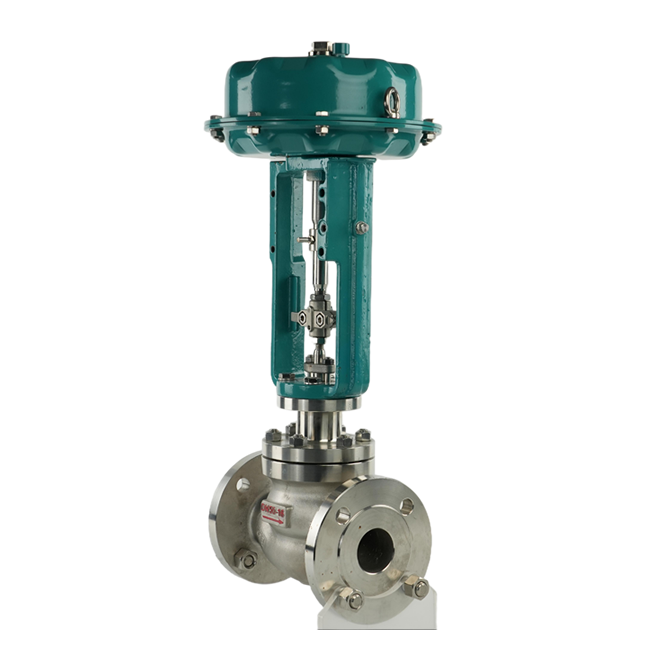
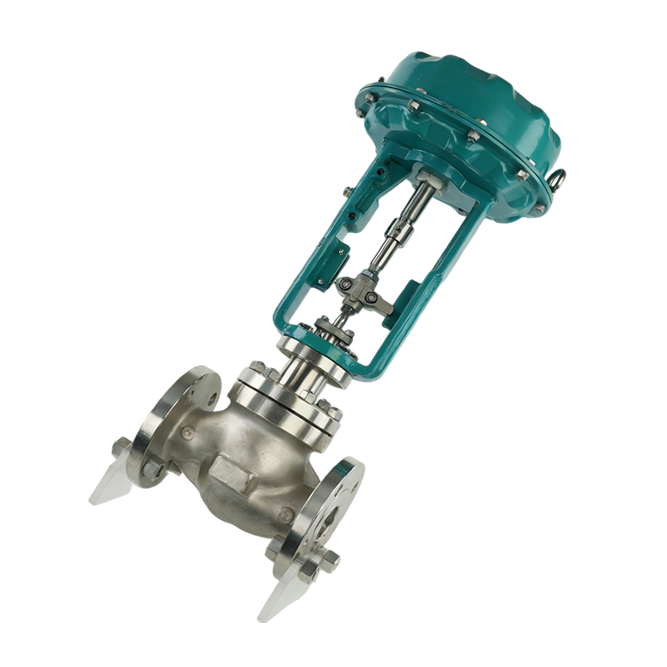
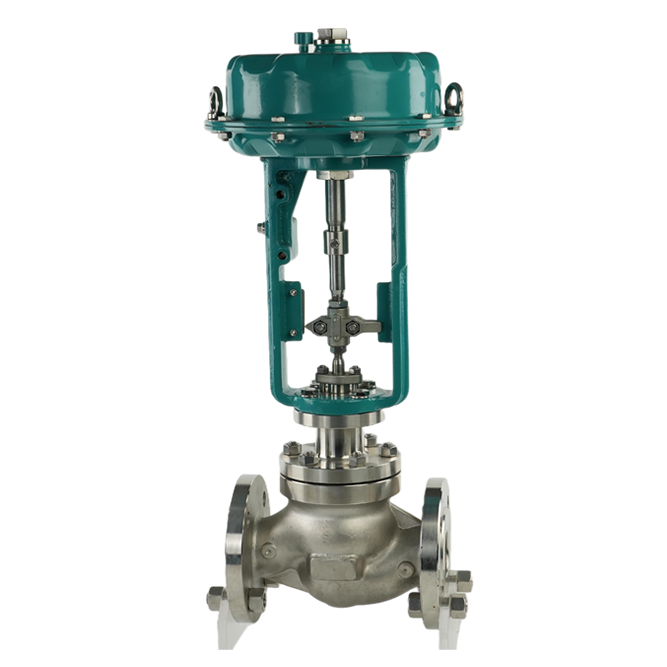
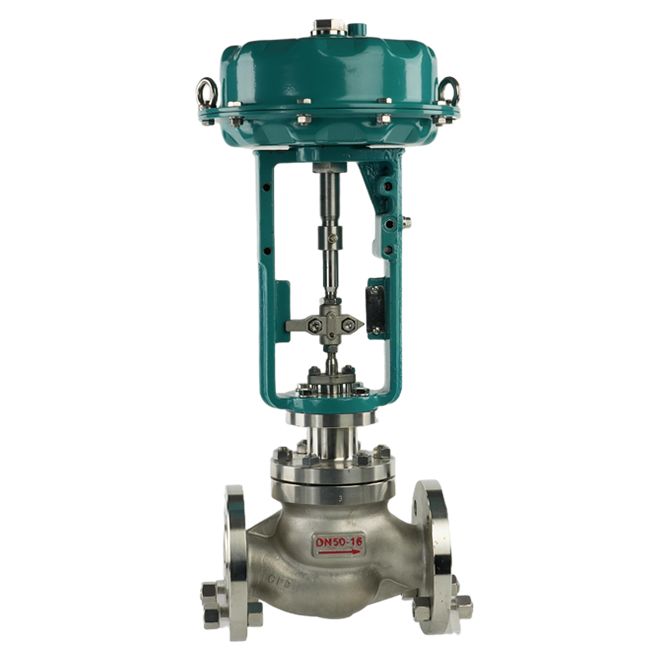
Pneumatic diaphragm single-seat regulating valve
Product Introduction
Pneumatic control valve for small-flow high-precision regulation, with single-seat body, single valve core seat, diaphragm actuator & electric positioner.
Electric positioner converts 4-20mA signal to pneumatic signal; diaphragm generates thrust to drive stem-core axial movement, adjusting flow cross-section for precise fluid regulation. Single-seat forced seal ensures low leakage; smooth actuator with uniform thrust, ideal for fine process control, economical precise element for process systems.
Quick Inquiry
Product Detail
I. Product Parameters
1. Material Parameters
• Valve Body/Goblin: Cast steel (WCB, standard operating conditions), stainless steel (304/316, corrosion resistant), chrome-molybdenum steel (WC6/WC9, high temperature and high pressure conditions)
• Valve Core/Seat: Stainless steel + hard alloy weld overlay (wear-resistant and erosion-resistant), PTFE-coated valve core (soft seal, zero leakage)
• Valve Stem: 304/316 stainless steel (corrosion resistant, anti-lock, polished surface)
• Diaphragm Actuator: Carbon steel powder-coated housing, nitrile rubber/fluororubber diaphragm (oil and corrosion resistant)
2. Specification Parameters
• Nominal Diameter: DN15~DN200 (corresponding to 1/2"~8")
• Nominal Pressure: PN16, PN25, PN40, PN63 (suitable for medium and high pressure pipelines)
• Connection Method: Flange connection (GB/T, ANSI, DIN) Standard), welded connection (optional for high-pressure conditions)
• Air source pressure: 0.14~0.4MPa (low-pressure air source for diaphragm drive)
3. Control and operating parameters
• Input signal: 4-20mA DC (standard adjustment signal), 0-10V DC (optional)
• Action mode: Air-to-open (air-delay valve shut-off, safety type), air-to-close (air-delay valve opening)
• Positioner: Electric valve positioner (improves adjustment accuracy, explosion-proof type optional)
• Protection rating: Valve body IP65, actuator IP54 (IP65 high protection optional)
• Explosion-proof rating: Optional Ex d II BT4/Ex d II CT6 (suitable for flammable and explosive environments)
• Operating temperature: -20℃~180℃ (PTFE) (Soft seal); -40℃~450℃ (Metal hard seal)
• Flow characteristics: Equal percentage characteristic (recommended), linear characteristic, quick-opening characteristic
• Regulation accuracy: Positioning accuracy ≤±2%, hysteresis ≤±1.5%
II. Product Advantages
•Smooth Adjustment and High Precision Adaptability: The diaphragm actuator provides gentle and uniform thrust, and the valve core operates without impact. Combined with an electric positioner, it meets the precise adjustment requirements of low-flow conditions, making it suitable for precision process control in chemical and pharmaceutical industries.
•Excellent Sealing Performance and Low Leakage: The single-core, single-seat forced sealing structure achieves Class VI zero-leakage with a soft seal configuration, while the hard seal version meets Class IV sealing requirements, making it suitable for media pipelines with stringent leakage control requirements.
•High Safety Redundancy and Reliable Operation: Supports both air-to-open and air-to-close operating modes. The air-to-open mode automatically closes the valve upon loss of air pressure, effectively preventing uncontrolled media leakage and improving operational safety in hazardous conditions such as chemical and gas industries.
•Simple Structure and Low Maintenance Costs: With no complex rotating parts, the failure rate is low. The actuator and valve body are easy to disassemble and assemble; the only vulnerable parts are the diaphragm and seals, resulting in low replacement costs and minimal daily maintenance workload.
• Flexible adaptability and high cost-effectiveness: Multiple materials and configurations are available; stainless steel models are resistant to acid and alkali corrosion, while chromium-molybdenum steel models withstand high temperatures and pressures. Compared to electric regulating valves, pneumatic diaphragm models have lower procurement and operating costs, making them suitable for large-scale industrial applications.
III.Product Applications
• Chemical and Fine Chemical Industry: Suitable for fine chemical raw material proportioning, reactor feed flow control, and precise acid and alkali solution dosing, adapting to low-flow, high-precision process requirements.
• Pharmaceutical and Food Industry: Suitable for pharmaceutical liquid metering, food and beverage ingredient adjustment, and aseptic filling pipeline control. The stainless steel material meets sanitary standards, ensuring zero leakage and preventing media contamination.
• Water Treatment Industry: Suitable for wastewater treatment dosing systems and pure water preparation water quality adjustment, precisely controlling reagent dosage to ensure stable and compliant effluent quality.
• HVAC Industry: Suitable for temperature and flow regulation of central air conditioning water systems and building-specific metering control, offering smooth operation and energy savings, reducing system operating energy consumption.
• Oil and gas sector: Explosion-proof design for oil and gas field wellhead sampling pipelines and gas transmission branch line flow regulation, adaptable to flammable and explosive hazardous environments, improving operational safety.